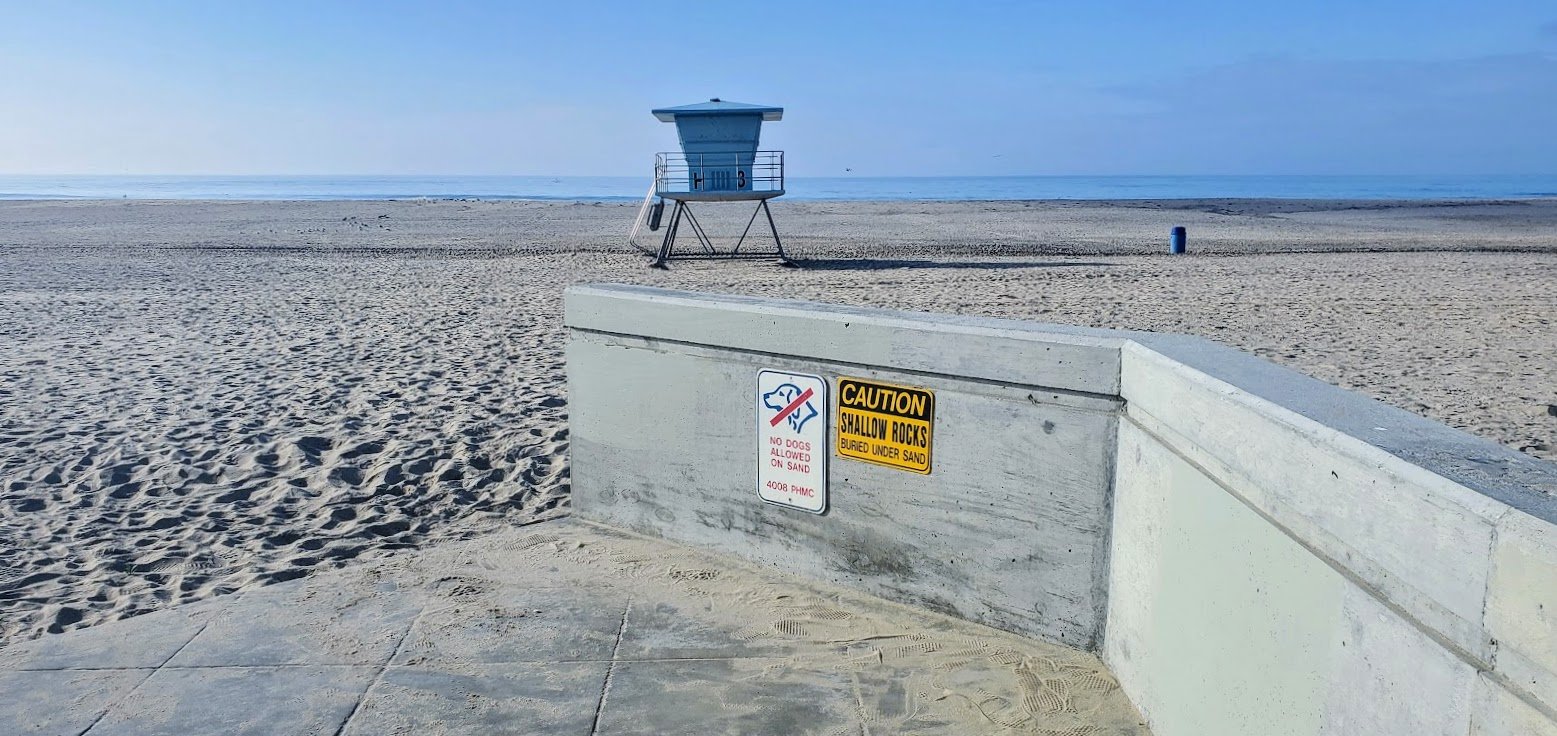
Dogs on the Beach
Dogs are not allowed on the sand at Hueneme beach, but there are several dog friendly beaches nearby!
Ventura County
Ventura County beaches are important habitat to a variety of shorebirds. We share the county’s beautiful beaches with wildlife that depend upon it for their survival. Many are also part of the California State Parks which, in general do not permit dogs on the beach, whether on leash or not. Dogs are permitted on leash within campgrounds and picnic areas that are within state parks.
Ventura County Beaches
LEASHED OK:
Thornehill Broome Beach
Silver Strand Beach
Channel Islands Harbor Beach
Marina Cove Beach
Marina Park
Promenade Park
Solimar Beach
Faria Beach County Park
Rincon Parkway North
Hobson County Park
Oil Piers Beach
Mussel Shoals Beach
La Conchita Beach
'ololkoy Beach Park (Oxnard Beach Park)
NO PETS:
Point Mugu State Park
Sycamore Cove Beach
Ormond Beach
Port Hueneme Beach (Sand)
Mandalay State Beach
McGrath State Beach
San Buenaventura State Beach
Emma Wood State Beach
Hollywood Beach (dogs on leash OK from sunrise to 9AM and 5PM to sunset)
Sharing the Shore
Our beaches are a thin ribbon of habitat that shorebirds need to rest and feed during their long distance migrations. As our population increases, places crucial for shorebird survival are decreasing. You as a dog owner can help.
Throughout the year, many different shorebirds can be found on the beaches of Ventura County. The little birds that run up and down in groups frantically digging for sand crabs on our beaches are sanderlings. They migrate to Ventura county beaches from the Arctic where they nest and breed. Whimbrel, long-billed curlew, marbled godwit, red knots, and black-necked stilts are also seen, mostly as they migrate between nesting and wintering grounds.
Western snowy plovers and California least terns, by contrast, breed locally on certain beaches in Ventura County. Both are federally protected species under the Endangered Species Act and it is illegal to disturb them (even unintentionally as dogs often do). Snowy plovers nest at McGrath State Beach, Mandalay State Beach, Hollywood Beach, and Ormond Beach. Least terns nest ad McGrath, Hollywood and Ormond. Both nest on dry sand above the surf line from March through August. The nests are depressions in the sand. Both birds and their eggs are well camouflaged and easily stepped on. We also find American avocets nesting on our beaches.
Nesting birds see you and your dog as predators. Dogs, especially off-leash dogs, can kill or disturb nesting plovers, terns or avocets and their chicks. Simple rope barricades are put up at most of these beaches in early March to protect the nesting areas from disturbance. Signs including some made by students in the Share the Shore Art Project are hung on the ropes to help identify the area.
Of course, dogs can’t read; so it is up to you to keep your dog off the beach!
We can be aware and share the shore with four simple actions:
Walk around birds instead of through flocks
Keep pets on a leash so they do not chase birds
Respect closed areas set aside for endangered or nesting species
Stay away from birds that look sick or injured or are unable to get away from humans.
“Paws-itive Beach Tips”
Bring fresh water and provide shade for your dog to avoid heat stroke on hot days. Drinking sea water can make your dog sick.
Rinse off salt water that irritates your dog’s skin and paws. Remove tar with cooking oil, not solvents. Sunblock can prevent sunburn on noses and pink skin.
Very hot sand and asphalt can burn paw pads.
Bring treats for training.
Bring biodegradable bags with you to pick up your dog’s “deposits”. Leaving feces or bags on the beach is illegal litter and will pollute the ocean.
Keeping your dog on a leash and under your control at all times is good for your dog as well as the birds! It helps prevent your dog from getting in fights with other dogs. Not all dogs are well trained! It helps keep them away from “stuff” that might make them sick.
Training your dog to “go” at home so you can keep the beach cleaner and reduce the environmental and financial costs of plastic bags.
Bring your cell phone in case of emergency and call 911 so your call will get to the right dispatch for that beach.
Helpful Information
If you find an injured bird, call the Ojai Raptor Center: 805-649-6884
If you see an injured seabird, call Santa Barbara Wildlife Care Network: 805-681-1080
If you see an injured mammal, call the Marine Mammal Center: 805-567-1505
Sources
Dog Parks
Fortunately, there are inland parks where dogs are permitted to run free. These include:
Calabasas
Bark Park, 4232 Las Virgenes Rd
Oak Park
Oak Canyon Dog Park, 5600 Hollytree Dr
Simi Valley
Simi Dog Park, 2151 Lost Canyons Dr
Thousand Oaks
Conejo Creek Dog Park, 1350 E Avenida De Las Flores
Estella Park, 300 Erbes Road
Walnut Grove Park, 400 Windtree Ave
Kimber Park, 3295 Bear Creek Rd
Camarillo
Mission Oaks Park, 5501 Mission Oaks Blvd
Camarillo Grove Park, 6968 E. Camarillo Springs Rd
Springville Dog Park, 801 Via Zamora
Oxnard
College Park, 3250 South Rose Ave
Campus Park, 5th St & H St
Ventura
Arroyo Verde Park, Foothill & Day Rd
Camino Real Park, Dean Dr & Varsity St
Ojai
Mitchell Edelson Dog Park, Inside Soule Park
Please visit park websites for hours and amenities.